Dalmatian
Firehouse icon. Athletic, unique purine metabolism means diet literally prevents bladder stones. Deafness is common. Not a casual pet.
Coat
short
Size
medium · 45-70 lbs
Life expectancy
11-13 yrs
Activity
very high
The breed
Where the Dalmatian comes from, and what living with one actually asks of you.
About the Dalmatian
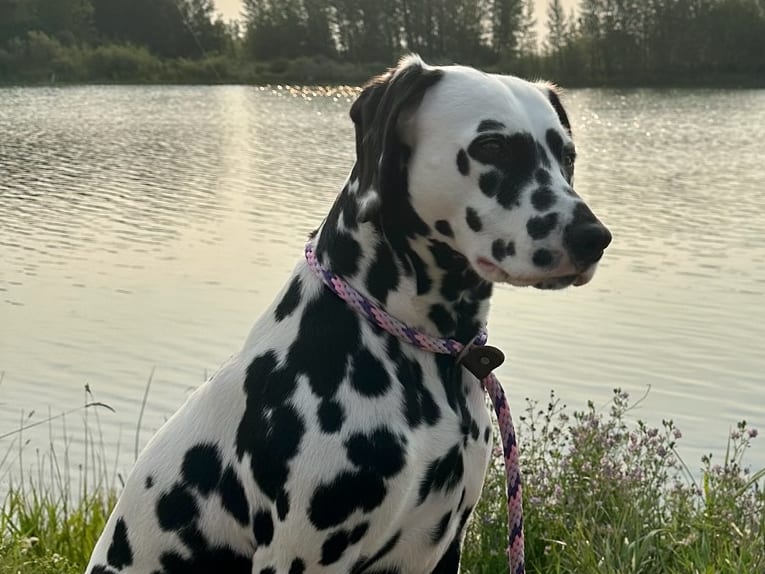
The Dalmatian is an athletic coach dog best known for running beside horse-drawn carriages and later fire apparatus, where stamina, steadiness around horses, and a striking spotted coat all mattered. The spots may be the first thing people notice, but the breed is built around endurance and alert companionship rather than novelty coloring.
Living with a Dalmatian works best for active owners who want a smart, energetic dog with strong opinions. Many are outgoing, dignified, and affectionate with family, but they can become destructive, reactive, or noisy when bored. They need socialization, exercise, training, and realistic management around children, visitors, and other dogs.
Health planning should focus on hearing, urinary health, skin, hips, and eyes. Local data flags deafness, urate urinary stones, skin allergies, hip dysplasia, and iris sphincter dysplasia. Dalmatians have a well-documented breed issue with high uric acid metabolism, so hydration, urination opportunities, and diet discussions matter. BAER hearing testing is the right way to identify unilateral or bilateral deafness in puppies.
Living with a Dalmatian
Dalmatians are usually smart, energetic, outgoing, and watchful. They can be good family dogs when children are respectful and the dog gets enough structure, but adolescent Dalmatians can be too bouncy for small kids. Some are dog-social; others are selective or intense.
Training should be positive, consistent, and active, with early work on recall, loose-leash walking, settling, and polite greetings. Barking and destructiveness often reflect under-exercise or under-management rather than a lack of intelligence.
Daily care
Feeding, exercise, and coat — plus how the routine shifts from puppy to senior.
Feeding a Dalmatian
Athletic spotted breed. Calorie needs vary with size, sex, and activity. Unique purine metabolism makes diet critical for bladder stone prevention.
Key nutrients
- —low-purine protein sources
- —omega-3
Watch out for
- ×organ meats
- ×high-purine proteins (sardines, mackerel)
Portion notes: Two meals daily. HYDRATION is critical for stone prevention — always fresh water.
Exercise & enrichment
Dalmatians need serious daily movement plus mental work. Running after maturity, hiking, carriage-style conditioning, agility, scent work, and obedience can fit. Feed to body condition and activity level, and discuss urinary-stone prevention with a veterinarian instead of relying on one universal diet rule.
Grooming routine
The short coat sheds more than many people expect. Brush weekly, bathe as needed, trim nails, brush teeth, and monitor skin for itching, hives, paw licking, ear inflammation, or hair loss. Watch urination habits closely: straining, blood, accidents, or frequent attempts to urinate deserve prompt care.
The Dalmatian through the years
Dalmatian puppies need BAER hearing testing, socialization, crate comfort, leash foundations, and safe exercise while joints develop. Start cooperative care and quiet-settle work early.
Adult Dalmatians need daily outlets, measured meals, water access, frequent urination opportunities, and monitoring for urinary signs, skin allergy signs, lameness, or vision changes.
Senior Dalmatians benefit from lower-impact exercise, dental care, urinary monitoring, arthritis support, skin management, and regular checks for hearing, vision, and mobility changes.
Health
What Dalmatians are prone to, the signs worth catching early, and what supports them.
Health concerns to watch
Unique purine metabolism = prone to urate bladder stones. LOW-PURINE diet essential.
Deafness is common (8% bilateral, 22% unilateral). BAER test puppies.
Needs serious daily exercise — bred to run alongside coaches for miles.
Is your Dalmatian scratching?
Dalmatians are prone to skin and allergy issues. Take our 2-minute itch triage quiz.
Supplements for Dalmatians
Matched to this breed's common health concerns. All NASC-sealed.
Cosequin (Nutramax)
The #1 vet-recommended joint supplement
- —#1 vet-recommended
- —NASC Quality Seal
- —Glucosamine + chondroitin
- —Clinically studied
Zesty Paws Allergy & Immune
Seasonal allergy + immune support chews
- —NASC Quality Seal
- —Seasonal allergy support
- —Salmon oil for skin
- —Chewable, dogs love them
Supplements support — they don't treat or cure disease. Talk to your vet for anything clinical.
Gear & services
Food, gear, training, and what the first year with a Dalmatian actually costs.
Fresh food picks for Dalmatians
Our recommended fresh-food subscriptions for medium dogs.
The Farmer's Dog
Fresh, human-grade food portioned for your dog
- —Human-grade fresh food
- —Portioned per dog
- —Vet-developed recipes
- —50% off first box
Ollie
Fresh food with both cooked and baked recipes
- —Fresh and baked recipes
- —Turkey, beef, lamb, chicken proteins
- —Custom portions
- —60% off first box
Nom Nom
Restaurant-quality fresh food with microbiome testing
- —Pre-portioned pouches
- —Vet-formulated
- —Microbiome testing available
- —50% off first order
Spot & Tango
Fresh or UnKibble — whole-food nutrition, your choice
- —Fresh or UnKibble options
- —Human-grade ingredients
- —Shelf-stable storage option
- —50% off first order
What to budget for a Dalmatian in year one.
A practical range for routine care and first-year setup. It assumes a dry or mixed diet and mostly at-home care; purchase and adoption fees are excluded.
Practical first-year range
$1,475-$4,125
A typical ongoing year runs $1,200-$2,650before optional services and unexpected medical care.
Food (year one)
Dry or mixed diet; fresh food can cost more
$600-$1,300
Gear & supplies (year one)
Crate, bed, harness, bowls, toys
$225-$500
Routine vet + preventatives
Wellness, vaccines, flea/tick and heartworm; no emergencies
$450-$775
Grooming
moderate needs; DIY to periodic professional help
$50-$350
Training
At-home work to group classes
$0-$600
Optional supplements
Not included in the headline totals
$0-$720
Other first-year
Microchip, license, spay/neuter if needed
$150-$600
Optional pet insurance
Not included above; premiums vary by age, ZIP and coverage.
$550-$1,300/yr
Also not included: fresh-food-only diets, boarding or day care, emergencies, and condition-specific treatment. Breed health risks are planning flags—not guaranteed annual bills.
Size-adjusted U.S. planning ranges, updated July 2026 and benchmarked against Rover's 2026 cost report and Synchrony's 2025 study. Actual costs vary by region and lifestyle.
Gear for Dalmatians
Breed-size-appropriate picks. Links go to Amazon.
Training for Dalmatians
Matched to Dalmatian temperament (dignified, smart, outgoing).
BAXTER & Bella
Online puppy training program, lifetime access
- —Lifetime membership
- —Self-paced video lessons
- —Puppy + adult content
- —Behavior troubleshooting
GoodPup
1-on-1 virtual dog training with certified trainers
- —1-on-1 live video sessions
- —Certified trainers
- —Custom per-dog plan
- —Weekly structure
Dogo
App-based training with daily structure
- —App-based daily plans
- —AI-guided feedback
- —Affordable monthly cost
- —Trick training library
GPS trackers for Dalmatians
Size-appropriate picks for tracking, activity monitoring, and escape alerts.
Fi
Smart collar with GPS + activity tracking
- —Real-time GPS
- —Activity + sleep tracking
- —Escape alerts
- —3-month battery
Tractive
Affordable GPS tracker with unlimited range
- —Attaches to any collar
- —Worldwide GPS coverage
- —Activity monitoring
- —Budget-friendly
Curious about their DNA?
Confirm breed mix, check for genetic health risks, and get actionable insights.
Embark
The most comprehensive dog DNA test
- —350+ breeds identified
- —250+ health conditions screened
- —Cornell-partnered science
- —Relatives finder
Wisdom Panel
Breed identification + health screening
- —350+ breeds
- —Genetic health insights
- —Budget-friendly option
- —Fast results
More on the Dalmatian
Similar-size breeds
Dalmatian questions, answered.
Why do Dalmatians need BAER testing?+
Do all Dalmatians need low-purine food?+
Are Dalmatians good running dogs?+
Are Dalmatians good family dogs?+
What health testing should I ask about?+
How long do Dalmatians live?+
How big do Dalmatians get?+
How much exercise does a Dalmatian need?+
What health problems do Dalmatians commonly have?+
Are Dalmatians hard to groom?+
What should I feed a Dalmatian?+
Are Dalmatians good for first-time owners?+
Ask Searchbreed about your Dalmatian
Get personalized answers about food, health, and care.