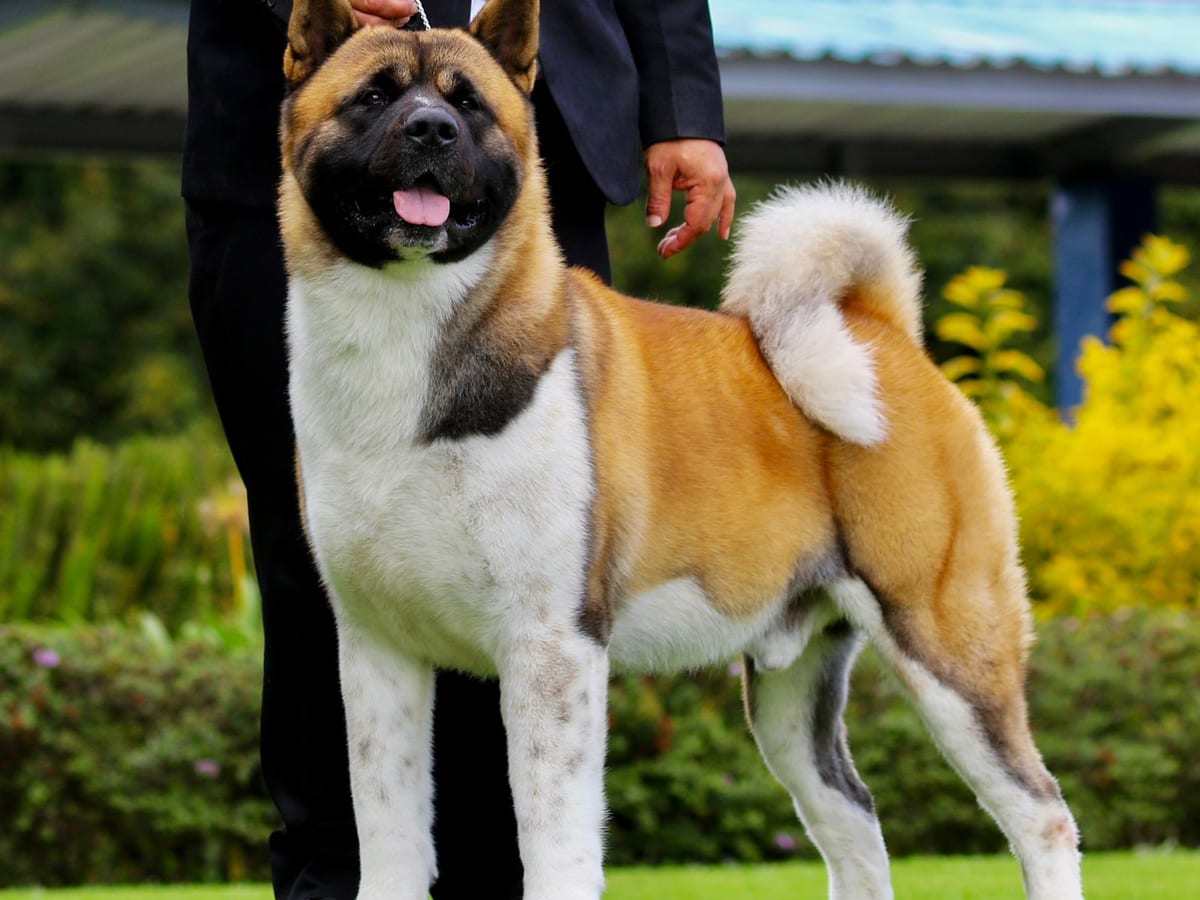
Akita
Dignified Japanese breed. Heavy shedder, devoted to family, needs experienced owners. Bloat-prone and skin-prone.
Coat
double
Size
large · 70-130 lbs
Life expectancy
10-14 yrs
Activity
moderate
The breed
Where the Akita comes from, and what living with one actually asks of you.
About the Akita
The Akita is a powerful Japanese working breed with roots in the mountain dogs used by Matagi hunters in northern Japan. Those dogs were valued for tracking and holding large game, including bear and boar, and the modern Akita still carries that seriousness: strong body, strong opinions, quiet watchfulness, and a deep sense of territory.
The breed's public identity is tied to loyalty. Hachiko, the Akita who waited at Shibuya Station after his owner's death, remains the best-known example. Helen Keller is credited with bringing the first Akita to the United States after visiting Japan in 1937, and post-war American servicemen helped establish the larger American type. Today, the American Akita and Japanese Akitainu are related but visibly divergent branches, with different breed communities and standards.
Living with an Akita is not like living with a generic large dog. They are usually devoted to their own household, reserved with strangers, and independent enough to make poor choices if the owner is casual. The health picture also deserves respect: Akitas are known for immune-mediated and skin conditions, thyroid disease, hip dysplasia, microphthalmia and PRA, and bloat/GDV risk. The right owner is experienced, consistent, and comfortable managing a dog that may not want dog parks, stranger pressure, or off-leash freedom.
Living with an Akita
Akitas are dignified, loyal, and often quiet, but they are not easygoing social butterflies. Many are aloof with strangers and intensely bonded to family. Same-sex dog aggression is a well-known breed-management issue, and many Akitas have enough prey drive that cats, small dogs, livestock, and wildlife require careful supervision or complete separation.
They are generally not a first-time-owner breed. Training should start early and stay fair, calm, and consistent; force tends to create conflict, while permissiveness lets the dog rehearse pushy behavior. They can be affectionate and even silly at home, but they are willful, naturally protective, and should not be expected to enjoy dog parks or casual greetings from unknown dogs.
Daily care
Feeding, exercise, and coat — plus how the routine shifts from puppy to senior.
Feeding an Akita
Large breed prone to bloat and immune-mediated skin issues. Feed twice daily with high-quality protein. Calorie needs vary widely by size, sex, neuter status, and activity; adjust to body condition.
Key nutrients
- —high-quality protein
- —omega-3
- —glucosamine
- —limited ingredients
Watch out for
- ×high-fat table scraps
- ×rich treats
Portion notes: Split into 2 meals, elevated bowls debated, avoid post-meal activity.
Exercise & enrichment
Akitas need steady daily exercise, but they are not built around frantic endurance. Most adults do well with structured walks, contained yard time, training, and low-chaos mental work. Avoid off-leash exercise in unsecured areas because of prey drive and dog-selective behavior, and avoid vigorous activity right around meals because this deep-chested breed has bloat/GDV risk.
Grooming routine
The Akita's double coat is relatively clean and many Akitas groom themselves in a cat-like way, but the coat is still a major commitment. Brush weekly most of the year, then daily during coat blows when the dense undercoat releases in clumps. Expect heavy seasonal shedding, usually around twice a year. Bathing is occasional unless the dog is dirty; focus instead on undercoat removal, nail trims, ear checks, dental care, and keeping skin changes visible under the thick coat.
The Akita through the years
Akita puppies need careful early socialization without flooding: neutral exposure to people, surfaces, handling, grooming, vet-style exams, car rides, and calm observation of other dogs. Puppy owners should teach leash manners, trade games, confinement, muzzle comfort, and polite doorway behavior early. Do not count on a puppy who likes every dog staying that way at maturity.
Adult Akitas need structure more than novelty: measured meals, two or more feedings per day, no hard exercise around meals, consistent house rules, secure fencing, and managed introductions. Watch for itching, coat loss, eye changes, digestive reactions, or signs of thyroid disease, and keep the dog lean to reduce orthopedic strain.
Senior Akitas benefit from twice-yearly wellness discussions, mobility support, non-slip surfaces, dental care, and closer monitoring for thyroid, skin, eye, orthopedic, and immune-mediated problems. Any retching without productive vomiting, distended abdomen, collapse, or severe restlessness should be treated as an emergency because of GDV risk.
Health
What Akitas are prone to, the signs worth catching early, and what supports them.
Health concerns to watch
Bloat risk — 2+ meals daily, no vigorous exercise within 1 hour of eating.
Immune-mediated skin issues are breed-linked — watch for itching, coat loss, or inflamed skin.
Omega-3s support skin and coat health generally; coat blows twice a year.
Common symptoms in Akitas
What to watch for, what causes it, and when to worry.
Itching & Scratching →
Chronic scratching, licking, or biting at skin — often a signal of allergies, parasites, o…
Paw Licking & Chewing →
Persistent paw licking or chewing — almost always allergies, sometimes boredom or anxiety.
Hair Loss & Bald Patches →
Thinning coat, bald spots, or patchy hair loss — often allergies or parasites, but endocri…
Is your Akita scratching?
Akitas are prone to skin and allergy issues. Take our 2-minute itch triage quiz.
Supplements for Akitas
Matched to this breed's common health concerns. All NASC-sealed.
Cosequin (Nutramax)
The #1 vet-recommended joint supplement
- —#1 vet-recommended
- —NASC Quality Seal
- —Glucosamine + chondroitin
- —Clinically studied
Zesty Paws Allergy & Immune
Seasonal allergy + immune support chews
- —NASC Quality Seal
- —Seasonal allergy support
- —Salmon oil for skin
- —Chewable, dogs love them
Supplements support — they don't treat or cure disease. Talk to your vet for anything clinical.
Gear & services
Food, gear, training, and what the first year with an Akita actually costs.
Fresh food picks for Akitas
Our recommended fresh-food subscriptions for large dogs.
The Farmer's Dog
Fresh, human-grade food portioned for your dog
- —Human-grade fresh food
- —Portioned per dog
- —Vet-developed recipes
- —50% off first box
Ollie
Fresh food with both cooked and baked recipes
- —Fresh and baked recipes
- —Turkey, beef, lamb, chicken proteins
- —Custom portions
- —60% off first box
Nom Nom
Restaurant-quality fresh food with microbiome testing
- —Pre-portioned pouches
- —Vet-formulated
- —Microbiome testing available
- —50% off first order
Spot & Tango
Fresh or UnKibble — whole-food nutrition, your choice
- —Fresh or UnKibble options
- —Human-grade ingredients
- —Shelf-stable storage option
- —50% off first order
What to budget for an Akita in year one.
A practical range for routine care and first-year setup. It assumes a dry or mixed diet and mostly at-home care; purchase and adoption fees are excluded.
Practical first-year range
$1,800-$5,000
A typical ongoing year runs $1,425-$3,525before optional services and unexpected medical care.
Food (year one)
Dry or mixed diet; fresh food can cost more
$750-$1,800
Gear & supplies (year one)
Crate, bed, harness, bowls, toys
$300-$650
Routine vet + preventatives
Wellness, vaccines, flea/tick and heartworm; no emergencies
$500-$850
Grooming
high needs; DIY to periodic professional help
$50-$600
Training
At-home work to group classes
$0-$400
Optional supplements
Not included in the headline totals
$0-$720
Other first-year
Microchip, license, spay/neuter if needed
$200-$700
Optional pet insurance
Not included above; premiums vary by age, ZIP and coverage.
$650-$1,550/yr
Also not included: fresh-food-only diets, boarding or day care, emergencies, and condition-specific treatment. Breed health risks are planning flags—not guaranteed annual bills.
Size-adjusted U.S. planning ranges, updated July 2026 and benchmarked against Rover's 2026 cost report and Synchrony's 2025 study. Actual costs vary by region and lifestyle.
Gear for Akitas
Breed-size-appropriate picks. Links go to Amazon.
Crate
for Akitas
Reddy Active harness
XXL/3XL · Petco
Bed
for Akitas
Collar
for Akitas
Leash
for Akitas
Slow feeder bowl
for Akitas
Chew toy
for Akitas
We may earn a commission from the Petco harness link.
Training for Akitas
Matched to Akita temperament (dignified, courageous, loyal).
GoodPup
1-on-1 virtual dog training with certified trainers
- —1-on-1 live video sessions
- —Certified trainers
- —Custom per-dog plan
- —Weekly structure
BAXTER & Bella
Online puppy training program, lifetime access
- —Lifetime membership
- —Self-paced video lessons
- —Puppy + adult content
- —Behavior troubleshooting
Dogo
App-based training with daily structure
- —App-based daily plans
- —AI-guided feedback
- —Affordable monthly cost
- —Trick training library
GPS trackers for Akitas
Size-appropriate picks for tracking, activity monitoring, and escape alerts.
Fi
Smart collar with GPS + activity tracking
- —Real-time GPS
- —Activity + sleep tracking
- —Escape alerts
- —3-month battery
Tractive
Affordable GPS tracker with unlimited range
- —Attaches to any collar
- —Worldwide GPS coverage
- —Activity monitoring
- —Budget-friendly
Curious about their DNA?
Confirm breed mix, check for genetic health risks, and get actionable insights.
Embark
The most comprehensive dog DNA test
- —350+ breeds identified
- —250+ health conditions screened
- —Cornell-partnered science
- —Relatives finder
Wisdom Panel
Breed identification + health screening
- —350+ breeds
- —Genetic health insights
- —Budget-friendly option
- —Fast results
More on the Akita
Compare the Akita
Similar-size breeds
Akita questions, answered.
Are Akitas good first dogs?+
Can Akitas live with other dogs?+
Do Akitas have high prey drive?+
What health testing should I ask an Akita breeder about?+
Do Akitas shed a lot?+
Are Akitas sensitive to anesthesia or medications?+
How long do Akitas live?+
How big do Akitas get?+
How much exercise does an Akita need?+
What health problems do Akitas commonly have?+
Are Akitas hard to groom?+
What should I feed an Akita?+
Are Akitas good for first-time owners?+
Ask Searchbreed about your Akita
Get personalized answers about food, health, and care.