Dachshund
Badger hunter turned couch companion. IVDD is the single biggest health concern — weight management and back care define the breed.
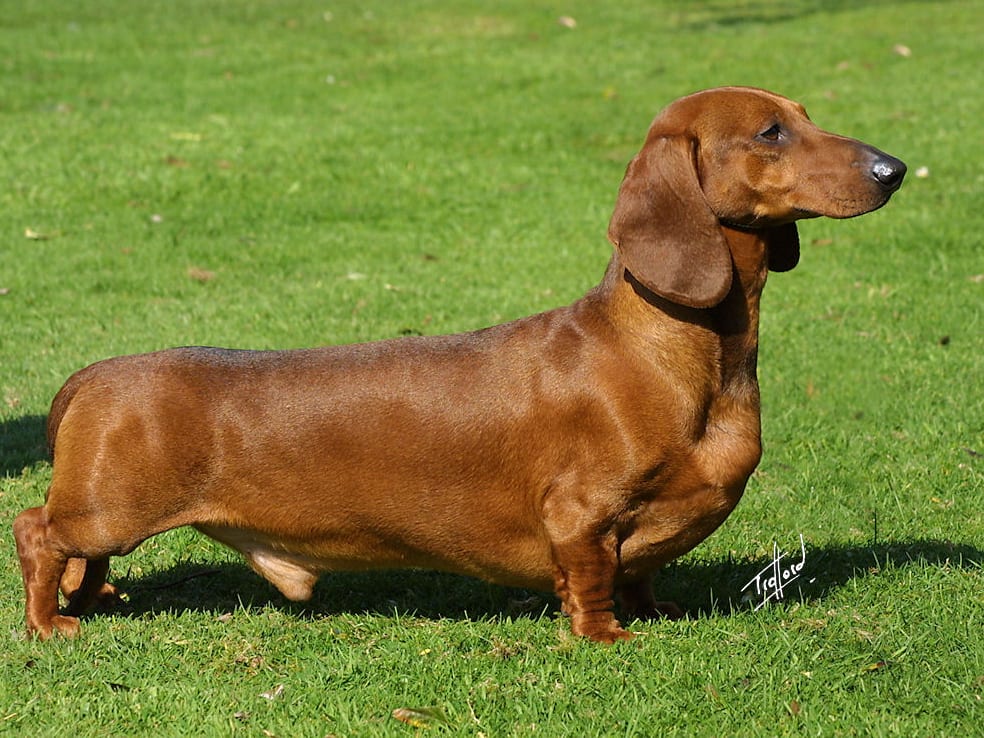
Coat
short
Size
small · 11-32 lbs
Life expectancy
12-16 yrs
Activity
moderate
The breed
Where the Dachshund comes from, and what living with one actually asks of you.
About the Dachshund
The Dachshund is a German hunting breed developed to go to ground after badger and other quarry. The long body, short legs, strong front, and bold personality are functional traits, but they also create a major spinal-care responsibility for modern owners.
Living with a Dachshund means managing a big hound-terrier personality in a small body. Many are affectionate, funny, alert, and brave. They can be stubborn, vocal, and prey-driven. Stairs, furniture jumping, slippery floors, excess weight, and rough handling are day-to-day management issues because IVDD is a central breed concern.
Health planning should center on IVDD without conflating it with ordinary soreness. Local data flags IVDD, patellar luxation, PRA, epilepsy, obesity, and dental disease. Back pain, reluctance to move, hunched posture, weakness, wobbliness, or dragging paws can be urgent. Weight control and environmental management reduce mechanical strain but cannot guarantee prevention.
Living with a Dachshund
Dachshunds are usually bold, clever, affectionate, and alert. They can do well with respectful children but may dislike rough handling. Many enjoy other dogs, especially other Dachshunds, while prey drive around small animals is real.
Training should be positive and consistent, with house-training patience, recall limits, quiet cues, handling, and prevention of resource guarding. They are small but not soft or automatically obedient.
Daily care
Feeding, exercise, and coat — plus how the routine shifts from puppy to senior.
Feeding a Dachshund
Small breed with major back issues. Calorie needs vary with size, age, neuter status, and activity; weight management is critical for spinal health.
Key nutrients
- —glucosamine
- —dental formulas
- —joint support
Watch out for
- ×high-calorie fillers
Portion notes: Two measured meals daily. No free-feeding — obesity risk is severe.
Exercise & enrichment
Dachshunds need daily walks and mental work, not couch-only living. Keep exercise low-impact and avoid repeated jumping. Feed measured meals to lean body condition; even small weight gain increases spinal strain.
Grooming routine
Grooming depends on coat type: smooth coats are simple, longhairs need brushing, and wirehairs need stripping or clipping. All need dental care, nail trims, ear checks, and back-aware handling. Use ramps or block furniture jumping where practical.
The Dachshund through the years
Dachshund puppies need back-safe household rules, ramp training, socialization, dental handling, and prevention of jumping habits before they become routine.
Adult Dachshunds need lean weight, walks, dental care, and urgent attention to back pain, weakness, dragging paws, seizures, eye changes, or knee skipping.
Senior Dachshunds benefit from non-slip flooring, arthritis support, dental planning, lower-impact sniff walks, and prompt evaluation of mobility, appetite, or pain changes.
Health
What Dachshunds are prone to, the signs worth catching early, and what supports them.
Health concerns to watch
IVDD is the defining health concern — prevent jumping, discourage stairs, use ramps.
Obesity directly worsens IVDD risk — strict portion control essential.
Dental disease is very common; daily care or dental chews.
Common symptoms in Dachshunds
What to watch for, what causes it, and when to worry.
Limping →
Favoring a leg, reluctance to jump, or stiffness — could be joint, injury, or paw issue.
Bad Breath (Halitosis) →
Strong or foul breath in dogs usually signals dental disease, sometimes GI or kidney issue…
Weight Gain & Obesity →
Noticeable weight increase, visible rib disappearance, or vet-flagged obesity — the most c…
Stiffness After Rest →
Dog is stiff or slow getting up from sleeping or lying down, then loosens up after moving …
Loss of Appetite →
Skipping meals, refusing treats, or eating much less than normal — often a sign of pain, n…
Excessive Thirst & Urination →
Drinking more, asking to go out more, larger urine clumps, or new accidents — classic sign…
Urinary Accidents →
Peeing indoors, leaking urine, or asking out more often — can be behavioral, but medical c…
Supplements for Dachshunds
Matched to this breed's common health concerns. All NASC-sealed.
Cosequin (Nutramax)
The #1 vet-recommended joint supplement
- —#1 vet-recommended
- —NASC Quality Seal
- —Glucosamine + chondroitin
- —Clinically studied
Supplements support — they don't treat or cure disease. Talk to your vet for anything clinical.
Gear & services
Food, gear, training, and what the first year with a Dachshund actually costs.
Fresh food picks for Dachshunds
Our recommended fresh-food subscriptions for small dogs.
The Farmer's Dog
Fresh, human-grade food portioned for your dog
- —Human-grade fresh food
- —Portioned per dog
- —Vet-developed recipes
- —50% off first box
Ollie
Fresh food with both cooked and baked recipes
- —Fresh and baked recipes
- —Turkey, beef, lamb, chicken proteins
- —Custom portions
- —60% off first box
Nom Nom
Restaurant-quality fresh food with microbiome testing
- —Pre-portioned pouches
- —Vet-formulated
- —Microbiome testing available
- —50% off first order
Spot & Tango
Fresh or UnKibble — whole-food nutrition, your choice
- —Fresh or UnKibble options
- —Human-grade ingredients
- —Shelf-stable storage option
- —50% off first order
What to budget for a Dachshund in year one.
A practical range for routine care and first-year setup. It assumes a dry or mixed diet and mostly at-home care; purchase and adoption fees are excluded.
Practical first-year range
$1,175-$3,125
A typical ongoing year runs $975-$2,025before optional services and unexpected medical care.
Food (year one)
Dry or mixed diet; fresh food can cost more
$450-$950
Gear & supplies (year one)
Crate, bed, harness, bowls, toys
$175-$400
Routine vet + preventatives
Wellness, vaccines, flea/tick and heartworm; no emergencies
$425-$725
Grooming
low needs; DIY to periodic professional help
$25-$150
Training
At-home work to group classes
$0-$400
Optional supplements
Not included in the headline totals
$0-$480
Other first-year
Microchip, license, spay/neuter if needed
$100-$500
Optional pet insurance
Not included above; premiums vary by age, ZIP and coverage.
$500-$1,150/yr
Also not included: fresh-food-only diets, boarding or day care, emergencies, and condition-specific treatment. Breed health risks are planning flags—not guaranteed annual bills.
Size-adjusted U.S. planning ranges, updated July 2026 and benchmarked against Rover's 2026 cost report and Synchrony's 2025 study. Actual costs vary by region and lifestyle.
Gear for Dachshunds
Breed-size-appropriate picks. Links go to Amazon.
Training for Dachshunds
Matched to Dachshund temperament (spunky, courageous, curious).
GoodPup
1-on-1 virtual dog training with certified trainers
- —1-on-1 live video sessions
- —Certified trainers
- —Custom per-dog plan
- —Weekly structure
BAXTER & Bella
Online puppy training program, lifetime access
- —Lifetime membership
- —Self-paced video lessons
- —Puppy + adult content
- —Behavior troubleshooting
Dogo
App-based training with daily structure
- —App-based daily plans
- —AI-guided feedback
- —Affordable monthly cost
- —Trick training library
GPS trackers for Dachshunds
Size-appropriate picks for tracking, activity monitoring, and escape alerts.
Fi
Smart collar with GPS + activity tracking
- —Real-time GPS
- —Activity + sleep tracking
- —Escape alerts
- —3-month battery
Tractive
Affordable GPS tracker with unlimited range
- —Attaches to any collar
- —Worldwide GPS coverage
- —Activity monitoring
- —Budget-friendly
Curious about their DNA?
Confirm breed mix, check for genetic health risks, and get actionable insights.
Embark
The most comprehensive dog DNA test
- —350+ breeds identified
- —250+ health conditions screened
- —Cornell-partnered science
- —Relatives finder
Wisdom Panel
Breed identification + health screening
- —350+ breeds
- —Genetic health insights
- —Budget-friendly option
- —Fast results
More on the Dachshund
Compare the Dachshund
Similar-size breeds
Dachshund questions, answered.
How serious is IVDD in Dachshunds?+
Should Dachshunds use ramps?+
Are Dachshunds easy to train?+
Do Dachshunds get dental disease?+
What health testing should I ask about?+
How long do Dachshunds live?+
How big do Dachshunds get?+
How much exercise does a Dachshund need?+
What health problems do Dachshunds commonly have?+
Are Dachshunds hard to groom?+
What should I feed a Dachshund?+
Are Dachshunds good for first-time owners?+
Ask Searchbreed about your Dachshund
Get personalized answers about food, health, and care.